
Find California Felony Records
California felony records are kept by state and county agencies. You can search court case files, arrest logs, and inmate data from home. The California Department of Justice keeps the main record base. County courts hold case files. Sheriff offices track bookings and custody status. Online tools let you look up this data fast. Some records are free to view. Others cost a fee. Access rules vary by agency and record type across the state.
California Felony Records Quick Facts
State Criminal Record Sources
The California Department of Justice runs the central hub for criminal data. DOJ keeps records for all arrests in the state. These are called RAP sheets. Over 45,000 groups can do checks through this system. DOJ processes about 2 million state checks and 1.2 million federal checks each year. You can get your own record from DOJ for $25. Use Live Scan to submit prints. Most checks take 48 to 72 hours if your prints are not on file. If they match past prints, a staff member must review your case by hand.
Live Scan sites charge $15 to $32 for the print service. The total cost runs from $40 to $57 for a full record review. Fee waivers are an option for those on public aid or with low income. Mail the waiver form with proof of need to DOJ. You cannot use a personal record review for visa or foreign travel. Third parties cannot request your DOJ record. Only you can ask for your own file under California Penal Code section 11105.
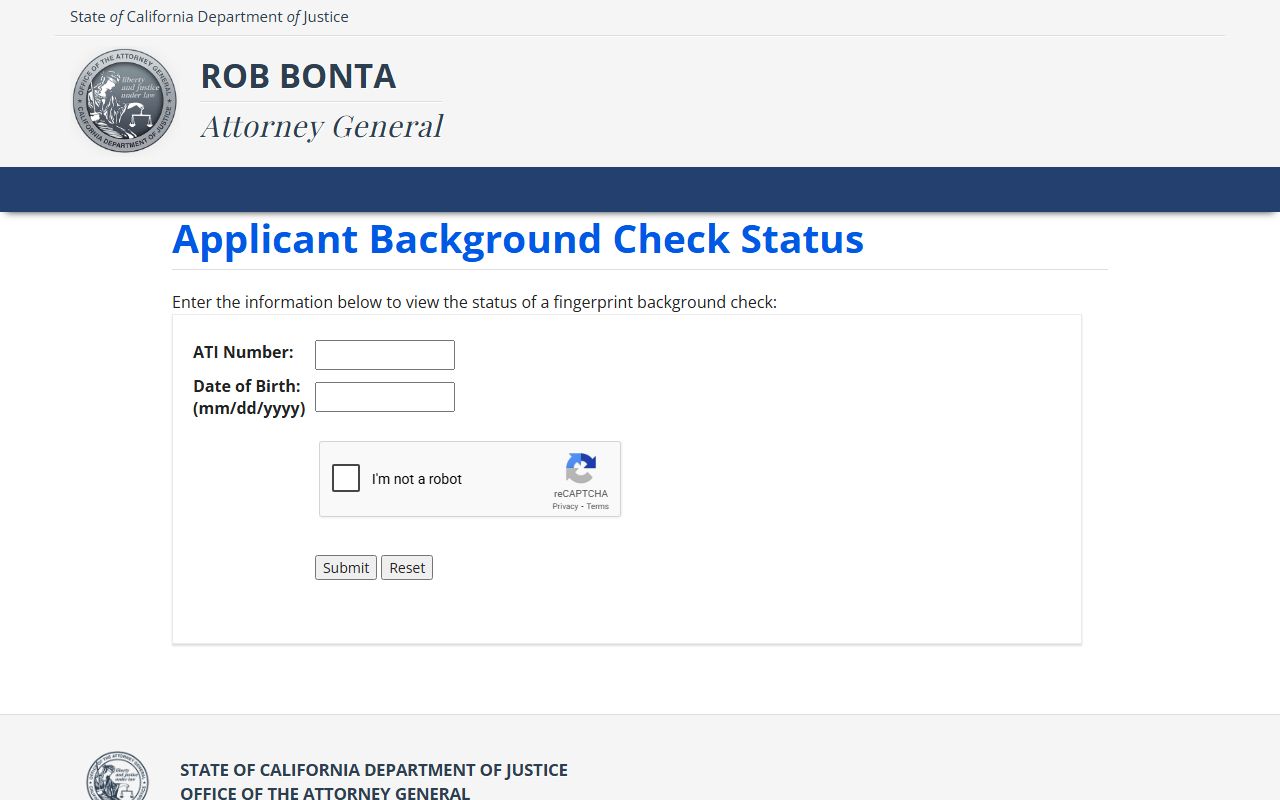
Check your DOJ application status online at applicantstatus.doj.ca.gov. You will need your ATI number and date of birth. The site shows whether your request is still being reviewed or if it is done. For questions, call the Record Review Unit at (916) 227-3849 or email recordreview@doj.ca.gov. California law requires DOJ to keep this central data bank and share it with approved users.
Superior Courts in each of the 58 counties handle felony cases. The Judicial Council of California sets rules for all state courts. Each court keeps its own case files and dockets. You must go to the county where a case was filed to get full records. Most counties now offer online search portals for case lookup. Fees for copies vary by county. Some courts charge nothing for online searches. Others bill $1 to $5 per search or per page of documents.
County Court Case Records
Los Angeles Superior Court offers a criminal case search at lacourt.org. Felony records go back to 1980. Misdemeanor records start in 1988. Guest users pay $4.75 per search. Registered users get lower rates after the first 10 searches. Documents cost $1 per page for the first five pages and 40 cents per page after that. The fee caps at $40 per document. This is one of the largest case databases in the state.
San Diego Superior Court uses an online index at courtindex.sdcourt.ca.gov. The search is free. You can find case numbers and basic details. To view documents, visit the courthouse in person or request copies by mail. Criminal case documents are not shown online. This is true in many California counties. Orange County uses a portal at visionpublic.occourts.org. The system shows case info for criminal and traffic matters. Government Code section 68152 requires courts to keep felony records for at least 75 years.
Riverside, San Bernardino, and Santa Clara counties also have online portals. Search by name or case number to find records. Each court sets its own fees and access rules. Some courts let you download documents for free. Others charge per page. The Judicial Council provides contact data for all 58 courts at courts.ca.gov. Call the criminal division in the county you need. Ask about search options and fees. Most clerks will help you over the phone or in person.
Inmate and Custody Data
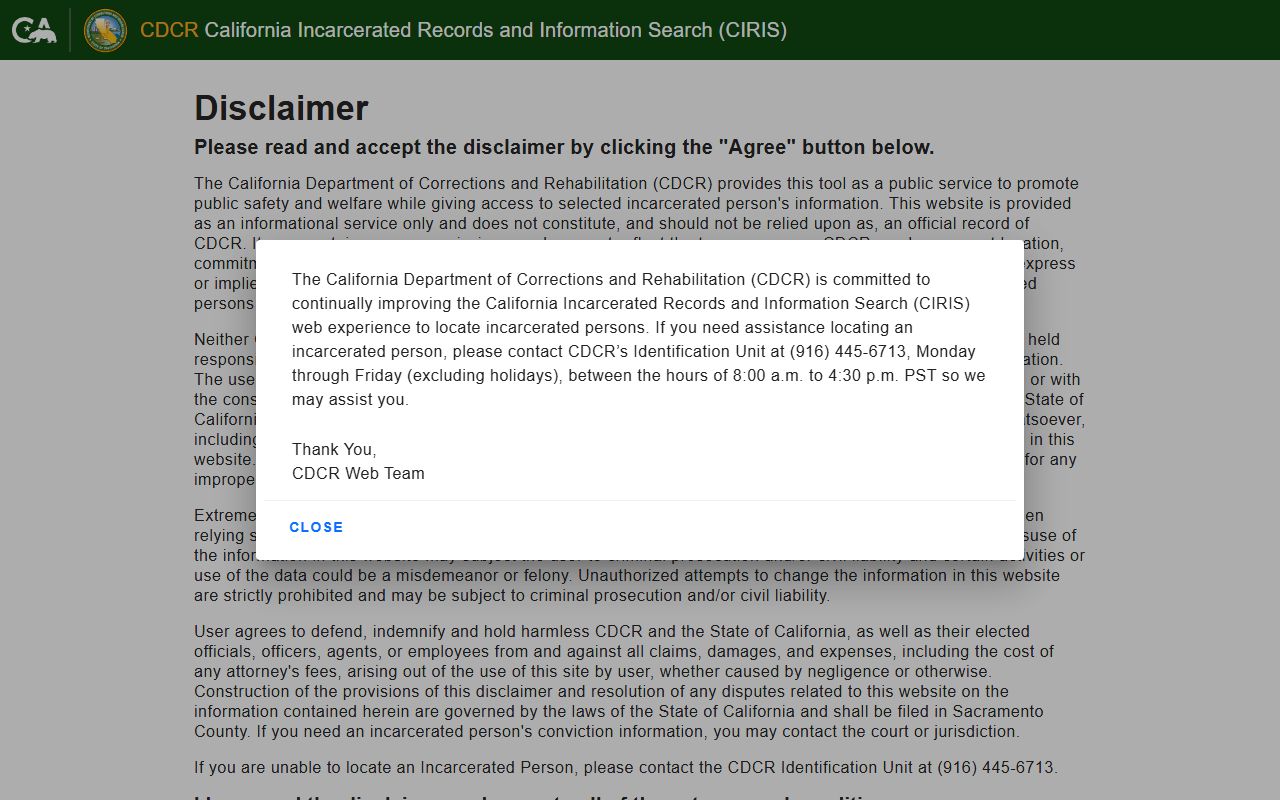
The California Department of Corrections and Rehabilitation keeps track of all state prison inmates. Use the CIRIS database at ciris.mt.cdcr.ca.gov to search for people in custody. CIRIS stands for California Incarcerated Records and Information Search. The system is free to use. Search results show name, CDCR number, age, location, admission date, and commitment counties. You can also see parole hearing dates and outcomes. Call the ID Unit at (916) 445-6713 if you do not know where a person is housed. Have the date of birth ready if the name is common.
County jails hold people before trial and those serving short terms. Each county sheriff runs the local jail system. Los Angeles County Sheriff operates an Inmate Information Center at app5.lasd.org/iic. The booking log is at app5.lasd.org/bklog. For 24-hour inmate info, call (213) 473-6100. San Diego Sheriff offers a Who's In Jail search at apps.sdsheriff.net/wij. The site goes offline each Wednesday at noon for upkeep.
Orange County Sheriff has an inmate locator at apps.ocsheriff.gov. Riverside uses jimspub.riversidesheriff.org for custody searches. San Bernardino posts data at jimsnetil.shr.sbcounty.gov. Most sheriff sites update in real time. Booking logs may lag by a few hours. These tools help you find current custody status fast. You do not need to give a reason for your search. Inmate data is public under state law.
California Sex Offender Registry
Megan's Law requires sex offenders to register with local police. California DOJ runs the public website at meganslaw.ca.gov. You can search by name, address, or zip code. The site shows photos, physical details, and offense info for registered offenders. A three-tier system sets how long a person must register. Tier 1 is a minimum of 10 years. Tier 2 is 20 years. Tier 3 is for life. This system started on January 1, 2021 under Senate Bill 384.
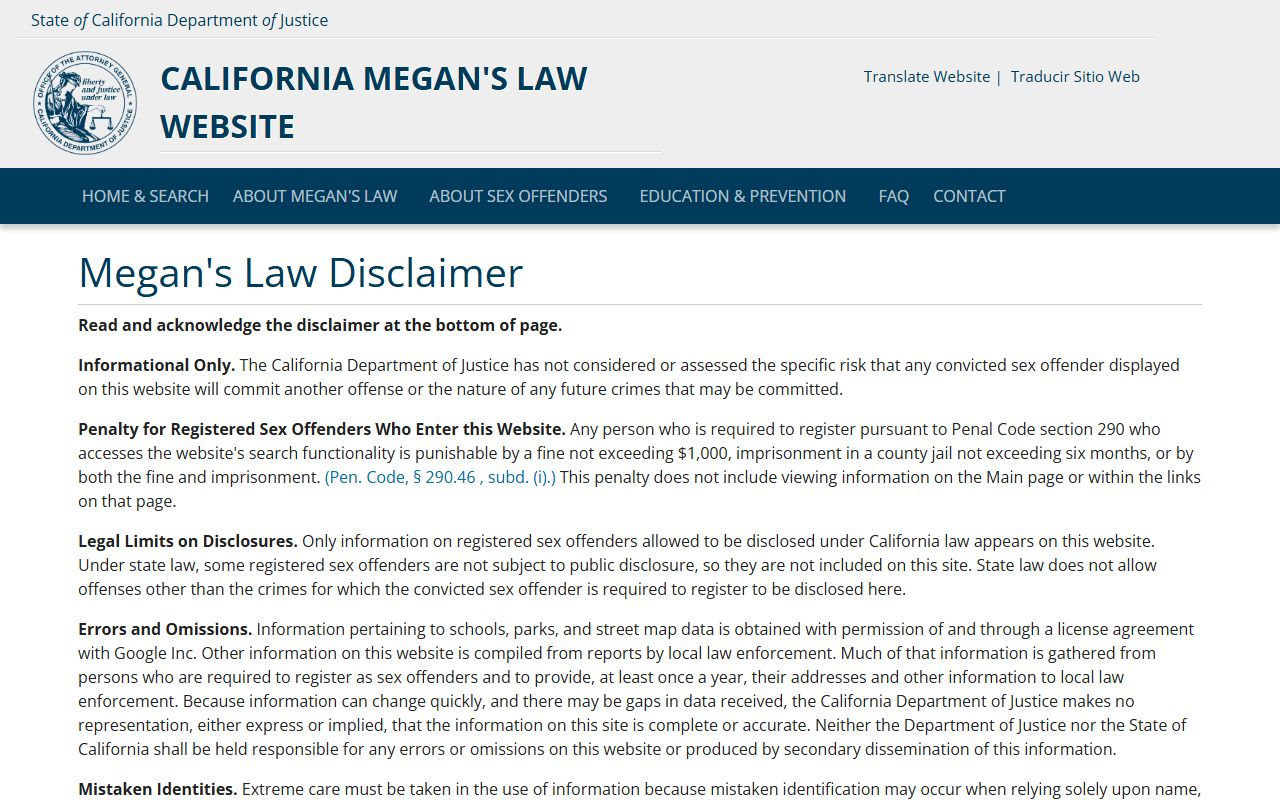
The site warns that you must use this data only to protect someone at risk. Using it to harass an offender or their family is a crime under Penal Code section 290.46. Registered sex offenders who access the site face fines up to $1,000 or six months in jail. Be careful with name matches. The site warns that mistaken IDs can happen when you rely only on name, age, and address. DOJ has not assessed the risk that any offender will commit a new crime. The data is for info only.
Email MegansLaw@doj.ca.gov with questions about the registry. The law applies to all sex offenders in the state. Local police track where offenders live and work. They send updates to DOJ. The public site shows most but not all registered offenders. Some may be excluded by court order or other legal rules. Always check with local law enforcement if you have concerns about a specific person or area.
California Criminal Record Laws
California Penal Code section 11105 requires DOJ to keep state summary criminal history info. This is the law that created the central record system. It lists who can access RAP sheets. Over 20 types of groups can get this data. They include police, prosecutors, public defenders, courts, and some employers. The law protects records from public release. Only authorized users can see full RAP sheets. You have the right to request your own record for review and to check for errors.
Penal Code section 13300 covers local summary criminal history. This is the data that county and city police keep on arrests and cases in their area. Sheriffs and police chiefs control access to local records. They can share them with other law enforcement and some other groups. Giving out records to the wrong person is a misdemeanor. The law sets fines and possible jail time for those who break these rules. Local and state records together form the full picture of a person's criminal past in California.
Penal Code section 290 is the Sex Offender Registration Act. It sets the duty to register and the penalties for not doing so. The law was updated in 2021 to create the three-tier system. Before that, most sex offenders had to register for life. Now some can petition to stop after 10 or 20 years if they meet the rules. Section 290.46 covers the Megan's Law website. It requires DOJ to keep the public search tool and sets the rules for who can be shown on the site.
Penal Code section 1203.4 allows some people to get an expungement. This means you can ask the court to dismiss your case after you finish probation. The judge may grant this if you stayed out of trouble. An expungement does not erase your record from the DOJ database. It also does not restore gun rights for felonies. It can help with jobs and housing. The conviction still shows on your RAP sheet but is marked as dismissed. View the full text of these laws at leginfo.legislature.ca.gov.
Record Fees and Wait Times
DOJ charges $25 for a personal record review. Add $15 to $32 for Live Scan prints. Most people pay $40 to $57 total. Court searches are often free online. Copy fees range from 10 cents to 50 cents per page. Certified copies cost $40 plus the per-page fee at most courts. Sheriff departments may charge $12 to $16 for local arrest reports. San Diego Sheriff charges $14 for a local criminal history plus a small card fee.
Processing times vary by agency and method. Live Scan results with no match take 48 to 72 hours. If your prints match a record, a technician must review it by hand. This can take weeks. The Judicial Council responds to public record requests within 10 days. Courts may extend this by 14 days in some cases. Sheriff booking logs update hourly or daily. CDCR inmate data is current. Most online portals show data in real time or with a short delay.
Fee waivers are an option if you get public aid or have low income. Ask DOJ for a waiver form when you request your record. Courts also waive fees for those who cannot pay. File an application with the court clerk. Show proof of income or aid. The judge decides if you qualify. This helps people who need records but lack the money to pay the normal fees. Not all agencies offer waivers so ask first.
Other Record Search Tools
VINE is a victim notification service. It alerts you when an offender is released from custody. Visit vinelink.com to register. You can also call (877) 846-3452. The system tracks inmates in county jails and state prisons. You get a call, text, or email when the person's status changes. VINE is free to use. It works across California and in most other states.
Many counties use third-party systems for court records. Tyler Odyssey is common in Los Angeles, Orange, San Diego, Fresno, and other large counties. FullCourt Enterprise runs in San Joaquin County. eCourt is used in Madera and Nevada counties. These systems have different layouts but work in similar ways. Search by name or case number. View case details and docket entries. Some let you download documents for a fee.
Police departments track their own arrest records and reports. Los Angeles Police charges $29 for a report copy. San Diego charges $12. Some cities like Huntington Beach offer free reports. Most agencies use online portals like NextRequest, GovQA, or Coplogic. You submit a request through the portal. The department reviews it and sends the records by email or mail. Fees and times vary widely across the state.
Browse California Felony Records by County
Each California county has a Superior Court and Sheriff office that keep felony records. Select a county below to find local court portals, jail rosters, and contact info for criminal records in that area.
View All 58 California Counties
Felony Records in Major California Cities
Large cities have local police departments that keep arrest records and reports. Pick a city below to learn about felony records and police report requests in that area.